Keys to making international transfers from Morocco
Discover how to make international transfers from Morocco securely and efficiently. Learn about the requirements, costs, time frames, and how to simplify the process.

Sending or receiving money abroad is a common operation for many companies that import, export, or maintain business relationships with international partners. In Morocco, this type of transfer is regulated by the Exchange Office and supervised by Bank Al-Maghrib, the country's central bank. This means that any movement of foreign currency to or from Morocco must comply with the official controls on the origin of funds and exchange regulations.
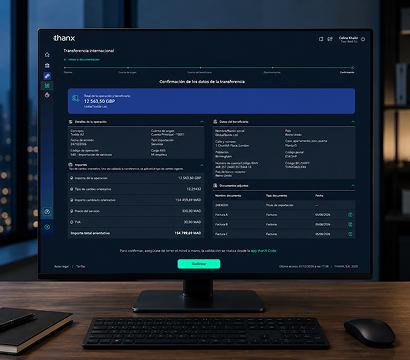
Understanding how international transfers work, their costs and time frames is key to planning your financial transactions safely. Furthermore, there are now digital solutions that simplify these processes, such as thanX, the tool that allows you to make international payments from Morocco quickly, transparently and in the currency you need.
What is an international transfer?
An international transfer is a transaction by which a company or individual sends money from a bank account in Morocco to another account abroad. These transactions are managed through international banking networks—such as SWIFT—that guarantee the security and traceability of the funds.
In Morocco, international transfers are subject to exchange controls, which ensures that transactions are legitimate and properly justified. Moroccan banks act as intermediaries between the company and the international network, verifying the documentation and processing the transaction.
Requirements for making international transfers
Before sending money out of Morocco, companies must comply with certain administrative and banking requirements. The main ones are:
- Having a foreign currency account: to be able to operate in foreign currencies (such as euros or dollars).
- Justify the origin and purpose of the funds: usually through pro forma invoices (preliminary sales invoices), purchase contracts or transport documents.
- Comply with the limits set by the Exchange Office: remember that these may vary depending on the type of operation.
- Verify payee details: making sure to correctly include the name, IBAN or account number, SWIFT/BIC code and the address of the receiving bank.
Meeting these requirements prevents delays or blocks and ensures that the transfer is completed successfully.
Costs and time frames of international transfers
The cost of an international transfer depends on factors such as the destination country, the currency, the amount, and the fees charged by intermediary banks. In general, there are three types of expenses:
- Issuing bank fee for the management and sending of the money.
- Intermediary bank fees if the transfer passes through several entities before reaching the beneficiary.
- Receiving bank fee for the reception and processing of the funds.
The time frames usually range between one and five business days, depending on the destination and the banking network used. Some banks offer express services for urgent transactions, with same-day confirmation.
To reduce costs and streamline the process, you can:
- See if the bank applies fixed or percentage rates.
- Check if there are additional costs for currency conversion.
- Use digital tools that offer more competitive exchange rates and fewer intermediaries.
How to make an international transfer step by step
- Access your online banking or mobile app. Log into your bank and select the international transfers option.
- Enter the payee's details.Carefully verify the IBAN and SWIFT/BIC code before continuing.
- Choose the currency and amount. You can choose the recipient's local currency or major currencies such as EUR or USD.
- Check the fees and the exchange rate. Confirm the total cost before authorising the transaction.
- Authorise the transfer. The bank will issue a digital receipt or proof of transaction details.
Tips for secure international transfers
Precision every step of the way is essential to avoid errors, duplications, or delays. Therefore:
- Avoid typos. A single incorrect number can delay or cancel the transaction.
- Verify the recipient's identity. Especially if it's a new supplier or business partner.
- Keep all your receipts. They are necessary to prove the transaction to the bank or the Exchange Office.
- Use regulated banking channels. Avoid unauthorised services or those without traceability guarantees.
Simplify your international transfers with thanX
Sending money abroad from Morocco can be easier with a digital solution that unifies the entire process. thanX allows you to:
- Send money from Morocco with complete security, integrating your operations with the PortNet system.
- Make payments in more than 15 currencies, including MAD, EUR, USD and GBP.
- Centralise international payments and collections on a single platform, with real-time control and monitoring.
- Take advantage of competitive exchange rates, reducing costs and simplifying daily management.
With thanX, your international transactions are faster, clearer, and more secure, helping you maintain control of your payments without complications.
How to send money abroad from Morocco: Practical guide for companies
Learn about the available options, local regulations, and best practices for sending money abroad safely and efficiently.
Dirham to euro exchange rate: Keys to protecting your business
If you operate in Morocco and need to convert dirhams to euros, we explain how the exchange rate works, which factors affect it, and how to avoid unnecessary losses.

Keys to making international transfers from Morocco
Discover how to make international transfers from Morocco securely and efficiently. Learn about the requirements, costs, time frames, and how to simplify the process.
How to make payments to international suppliers from Morocco
Discover how to make payments to international suppliers from Morocco. Learn about the available methods, the applicable regulations, and how to manage your operations securely and efficiently.
Your money,without borders
Join thanX